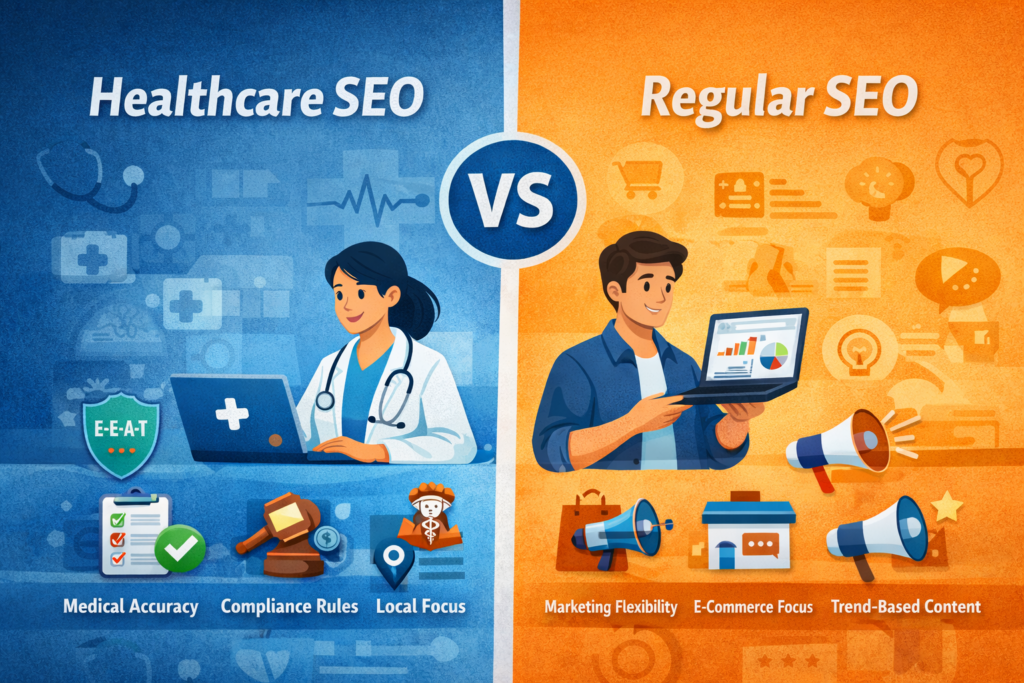
Search engine optimization is not a standard solution for everyone. On one hand, the basics of SEO keyword research, content creation, technical optimization, and link building are indeed the same no matter the industry; on the other hand, healthcare SEO has to be on a whole different level of scrutiny. Healthcare websites such as doctors practices have to worry about topics that are highly sensitive, gaining patients trust, and making sure that the information is medically accurate. This is why their SEO strategy is far more regulated and responsibility, driven than regular SEO.
1. Healthcare is under YMYL guidelines
Google classifies healthcare content into the Your Money or Your Life (YMYL) category. These are topics that can greatly impact the health, safety, or financial condition of a person. Since medical information may result in people making decisions that can literally change their lives, search engines enforce higher standards for such.
While businesses from general industries like fashion or travel only need to put out good content for their websites, healthcare practitioners are required to show high levels of expertise, authoritativeness, and trustworthiness (E, E, A, T) through their web pages. Content not backed up with medical validation might have a hard time ranking well, even if it is optimized properly.
2. Precision is a must
Generally, content in regular SEO can be about trends, personal views, or promotional messages. In healthcare SEO, however, it is a matter of life and death that accuracy is maintained. Any statement has to be supported by scientific evidence and reviewed by a medical professional.
Disseminating outdated or erroneous information will not only cause a drop in ranking but also put the patients in danger. Healthcare websites are required to reference trusted medical resources, have content verified by doctors, and periodically update their articles to the latest standards.
3. Trust Signals Carry More Weight
Trust is at the core of healthcare marketing. Patients looking for doctors, clinics, and hospitals generally assume that these facilities are credible. Thus, healthcare SEO entails: Clear author credentials (MD, specialist details)Patient testimonials with authenticity Secure website (HTTPS)Transparent contact information Compliance with privacy standards While a generic business website might rank without showing deep credentials, a healthcare site simply cannot.
4. Legal and Ethical Compliance
Healthcare SEO, advertising, and patient privacy must be in agreement with each other. Promotional claims such as guaranteed cure or 100% results may cause the company to get into trouble with the law and be penalized by the search engines. Regular industries enjoy more freedom in their marketing language. Healthcare providers, on the other hand, have to carefully carry out ethical communication while optimizing their content.
5. Local SEO Is More Critical
Though local SEO matters for most businesses, it is indispensable for healthcare providers. Patients most often search for: Best dentist near me Cardiologist in Jaipur Hospital near me Making the Google Business Profiles perfect, getting patient reviews from patients who are already there and maintaining a consistent NAP (Name, Address, Phone) are very important for visibility.
6. Content Depth and Structure Requirements
Firstly, well, structured and comprehensive content is the hallmark of healthcare SEO. Medical niches do not favor thin content in general. Here is what a webpage may require:, Clear explanation of symptoms, What causes and what the risk factors are, How the diagnosis is made, What the treatment options are, FAQs Search engines give preference to comprehensive medical guides over shallow blog articles.
7. Reputation Management Impacts Rankings
Online reputation is a major factor that influences a company’s performance in SEO healthcare. Negative reviews, inconsistent ratings, or poor patient feedback can lead not only to loss of trust among users but also to decline in local rankings. So, the reputation management has become a part of the SEO strategy.
Conclusion
Simply put, healthcare SEO is quite different from regular SEO in that it is a high, stakes environment. Basically, it requires medical accuracy, compliance, trust, building, and strong local optimization. While regular SEO may focus on traffic and conversions, healthcare SEO puts emphasis on credibility and patient safety firstbecause in this industry, visibility without trust is meaningless.
A good healthcare SEO strategy is one that combines the technical optimization with the element of ethical responsibility, thus securing not only strong rankings but also patient confidence.
FAQs:
Healthcare SEO deals with medical information that can directly impact a person’s health and safety. Because it falls under YMYL (Your Money or Your Life) guidelines, search engines apply stricter quality and trust standards compared to other industries.
E-E-A-T stands for Experience, Expertise, Authoritativeness, and Trustworthiness. In healthcare SEO, content must demonstrate medical expertise and credibility, often requiring doctor-reviewed articles and verified credentials to rank well.
Healthcare content must be accurate, evidence-based, and regularly updated. Unlike regular SEO content that may focus heavily on trends or promotions, healthcare content prioritizes patient education and medical accuracy.
Yes, local SEO is crucial because patients typically search for nearby doctors, clinics, or hospitals. Optimizing Google Business Profile, managing patient reviews, and maintaining consistent contact details significantly impact visibility.
Yes, exaggerated or misleading medical claims can harm rankings and create legal risks. Healthcare SEO requires ethical marketing practices and compliance with medical advertising regulations to maintain credibility and trust.

Shalini Verma is a Healthcare SEO specialist with over 10 years of experience helping doctors, clinics, and hospitals grow their online presence through strategic, ethical search optimization. She has worked extensively on medical website optimization, local SEO, and organic traffic growth, focusing on improving search rankings and increasing patient appointments. With deep industry knowledge and a data-driven approach, Shalini helps healthcare practices build long-term visibility and trust in competitive markets.